Ocean Freight Rates Surge as US–Asia Trade Ties Progress
Container rates along major trans-Pacific and Asia-to-Europe routes have improved by double-digits recently, as negotiations proceed on significant regional trade deals.

Container rates along major trans-Pacific and Asia-to-Europe routes have improved by double-digits recently, as negotiations proceed on significant regional trade deals.
President Donald Trump has reportedly agreed to a 10% reduction in US tariffs on a broad range of Chinese imports, following a high-level meeting held in Seoul, South Korea, with Chinese President Xi Jinping.
Despite the latest surge in tariffs and mounting geopolitical tensions, global trade has held up far better than many expected. According to the latest Global Connectedness Tracker, the world’s trade networks are still very much active, and globalization, though sometimes perceived to be under threat, has yet to reverse course.
Trump administration has issued sharp warnings against nations supporting a proposal to impose mandatory greenhouse gas (GHG) limits and a global carbon pricing system on international shippin, calling it a ‘European-led neocolonial export of global climate regulations’.
Global trade is bracing for significant disruption after President Donald Trump announced plans to impose a 100% tariff on all Chinese imports, effective November 1, 2025, or sooner depending on future developments. The move represents a dramatic escalation in US – China trade tensions, coming just one day after Beijing unveiled sweeping new export controls on rare earth elements
The recent announcement of a first-phase ceasefire between Israel and Hamas has bring cautious optimism across the global shipping industry, raising hopes that the long-disrupted Suez Canal corridor may finally begin its recovery.
The EU and Indonesia officially launched trade negotiations on 18 July 2016, with the 19th round held in July 2024. Since then, talks continued in an ad-hoc format. On 23 September 2025, the EU and Indonesia concluded negotiations on both the CEPA and a parallel Investment Protection Agreement.
As one of the most important container shipping routes, the Asia-US trade lane has been experiencing a significant shift in pricing dynamics in the second half of 2025. Starting from mid-summer, container spot rates began to slide, and by mid-September, industry watchers confirmed that shipping lines were cutting prices significantly.

The Port of Long Beach recorded impressive figures in August, highlighting both the strength of US import demand and the volatility created by shifting trade policies.
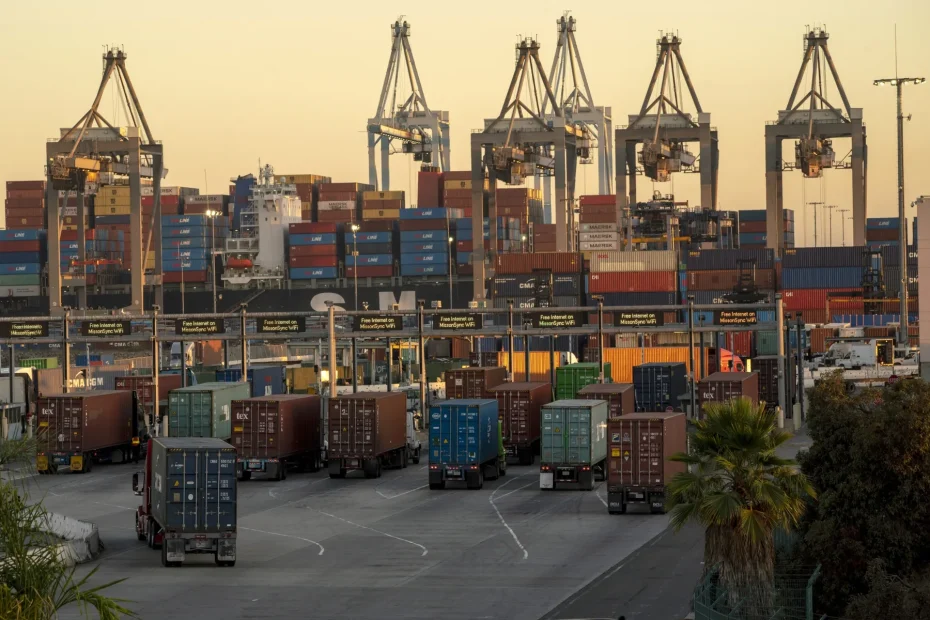
Amid rising tariffs, US container ports are expected to see a steady drop in import cargo volumes through the end of this year, following what was nearly a record-setting summer.